20 Easy Pieces Of Advice On Global Health and Safety Consultants Software
Wiki Article
Beyond Compliance In The Case Of Local Consultants, How They Use Global Software To Conduct Seamless Audits
The business of ensuring compliance for a long time maintained a naivete in which an auditor is affixed in, checks boxes against an established standard and leaves with a document which guarantees safety for a further year. Anyone who has faced an audit has realized this is a myth. Safety is not found by examining checklists but through the decisions that are made every day by those living on the ground, whose decisions are shaped local community, local pressures and the local knowledge of risk. The most significant development in international auditing for health and safety is not a better tool or more intelligent consultants on their own or in isolation, but the amalgamation of both: local experts armed with global platforms that allow them to look at what's important and overlook the rest. It is a process of auditing that takes you beyond compliance theater to genuine operational analysis.
1. The Audit Becomes a Conversation and not an interrogation
When a foreign auditor arrives with a clipboard, a established checklist, it is adversarial from the beginning. Local managers can become defensive concealing problems rather than uncovering them. The integration of software from the world in conjunction with local advisors changes this process completely. A consultant from the same region, speaking the same dialect and having the same understanding of cultural context, can utilize the software framework as for a conversation starter instead of an interview script. They know which questions will bring people together and cause excessive friction. They are able to read between the lines of responses in ways a foreigner cannot.
2. Software Provides the Spine Consultants are the Flesh
Global audit platforms are extremely efficient in providing structure. They can ensure consistentness, make sure that all the required fields, and keep audit trails that are acceptable to headquarters and regulators alike. Structure alone is not enough to produce effective audits. Local consultants are the ones that gives audits a meaning: the ability to recognize that a safety warning is placed but is not used, employees are adhering to procedures as they are observed, but making a mess while on their own, or that a documentation of risk assessments bears little relation to actual workplace conditions. The software ensures that nothing has been ignored; the consultant assures everything that is discovered actually counts.
3. Real-Time Data Updates What Auditors Search For
Traditional auditing is based on sampling, looking at specific records and hoping they reflect the complete. When local consultants use world-wide software platforms they can access current data from all websites across the globe, not only the one they're visiting. They shift their focus from gathering data to confirming and interpreting the data that they have already collected. They will know which metrics are trending poorly or are not performing well, which sites have frequent issues, and where to check for any issues. The audit turns into a specific investigation, not a blind fishing expedition.
4. Language Barriers Disappear When They Have the Most Impact
Even with translations in place, inspections conducted across language barriers lack vital nuance. Simple distinctions between "we occasionally do that" and "we do that repeatedly" can tell whether a result is a major violation or just a minor one. Local consultants operating on global software remove this confusion completely. In interviews, they speak the language of the region, and record precisely what workers are saying, without filtering for interpretation. The software will then translate this local input into formats that can be read by global leadership. This preserves the richness of local understanding while allowing central analysis.
5. Audit Fatigue is Overdue Using Continuous Integration
Many multinational companies suffer from audit fatigue--different departments, different regulators as well as different customers, all requiring separate audits for the same locations. Local consultants who use integrated software from around the world can fulfill this requirement, completing one audits that satisfy multiple stakeholders at the same time. It combines results with different frameworks simultaneously, ISO standards local regulations corporate standards, codes of conduct among customers. Thus one audit will produce reports that are applicable to all. This is less burdensome for local sites while improving the overall visibility.
6. Cultural contexts can prevent recommendations from being misguided.
Local safety managers are frustrated by nothing more than audit suggestions that do not make sense in their context. A European consultant might recommend the use of engineering controls that are not feasible locally, or administrative control that is incompatible to the cultural norms surrounding authorities and hierarchy. Local consultants who use global software are able to avoid this completely. Their recommendations are grounded in the actual possibilities local to them, and the software helps them analyze their regional peers instead of imposing a wrong solution from a distant headquarters.
7. The Software learns from local Application
Modern audit platforms incorporate pattern recognition and machine learning However, these systems are only as effective as the data they are fed. When local consultants use the software consistently, they train it on regional patterns--identifying which leading indicators actually predict incidents in their context, which control failures most commonly precede accidents, which industries in their region face distinctive risks. Over time, the software gets smarter about the region, offering increasingly relevant insights to all consultants who work in that region.
8. Audit Reports Turn into Living Documents They're not just decorations for the shelf.
The traditional audit report follows a predictable path writing with intense effort to be read with a ceremony read by a few people after which it is buried in a file cabinet until the coming audit. Local consultants who use global platforms transform reports into dynamic documents. Findings are immediately logged into systems which track the corrective actions, assigning responsibilities in the course of completing. The audit doesn't end when the consultant leaves; it continues until resolution through the use of software that ensures all findings receive the proper time and attention. Additionally, the consultant is always available to provide advice on the implementation.
9. Regulators are increasingly accepting technology-enabled auditing
All regulatory bodies are rethinking their requirements regarding audit evidence. They are now accepting digitally signed records, photographs that are geotagged and timestamped, and real-time data feeds as equivalent to paper records. Local consultants working with software from around the world can satisfy these new requirements effortlessly, giving regulators secured access to auditing information, not piles of paper. The acceptance of technology-driven auditing lessens administrative burden, while also increasing the regulatory assurance about audit results.
10. The Consultant's Role Changes from Inspector to Partner
Perhaps the most dramatic change made by this integration the relationship between consultants and clients. With the help of global software that provides visibility and tracking, the local consultant shifts from being an occasional inspector - feared shunned, disregarded, avoided to a continuous partner in improvement. They are able to spot potential problems ahead of audits, and they can provide advice on how to prevent them rather than simply resolving issues after the time. They are the first ones to be contacted by clients for help, not hiding to them until their next cycle of audits. This model of partnership produces safer outcomes for safety than audits before, precisely because it is based on trust, not fear. See the top rated global health and safety for blog tips including fire protection consultant, ohs act, safety inspectors, health in the workplace, on site health and safety, smart safety, office safety, safety tips, workplace safety courses, occupational health and safety careers and recommended health and safety services for blog info including occupational health and safety specialist, occupational health and safety act, occupational health, safety training, job safety assessment, occupational health and safety jobs, safety measures, safety website, safety precautions, occupational health & safety and more.
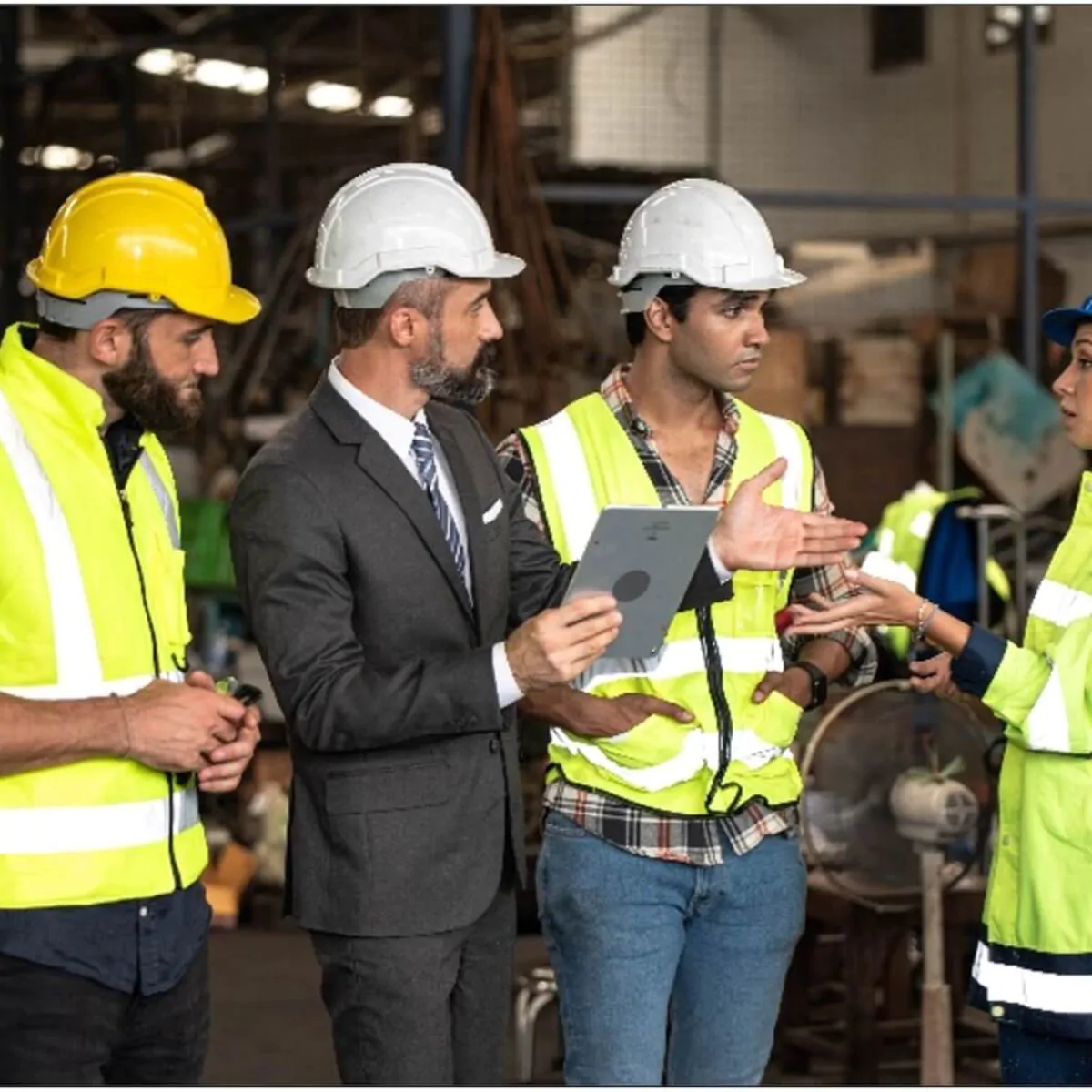
The Future Of Workplace Safety: Integrating On-The-Ground Expertise With Global Tech Solutions
The safety industry is at a crossroads. For over a century, the advancement of safety has meant better engineering controls, higher-quality training, and more rigorous enforcement. These methods are still essential however they've seen an end in some industries. The next leap forward in technology will not be due to a single idea, but instead from the merging of two competencies that have historically developed in isolation an understanding of the contextual depth of experienced safety experts who know specific workplaces and the analytical power of technologies that manage huge amounts of data and discover patterns that are unnoticed by any individual observer. This isn't about replacing humans with computer algorithms. It's about improving the human judgement with machine intelligence so that the safety professional in the field improves their effectiveness, is more accurate, and more influential more than before. Future workplace safety is to those who can combine the two worlds seamlessly.
1. the limits of Purely Technological Approaches
The tech industry has regularly offered that software alone could improve workplace safety. Sensors could detect dangers algorithmic systems would be able to predict incidents and artificial Intelligence would determine what workers should do. These promises have been repeatedly shattered because safety is fundamentally a human issue. It's a human issue that involves the human mind, human relationships with human beings, and their consequences. Technology has the ability to help and inform but it is not able to replace the deep understanding that an skilled safety professional can bring to a complicated workplace. The future is about integration and not to replacement.
2. What are the limits of Purely Human Approaches
Similarly, only human approaches have reached their limit. Even the most knowledgeable security professional can only see so much, remember all the information, and connect multiple dots. Human judgment is susceptible to fatigue, bias, and the limitations of an individual's perspective. Nobody can be able to hold in their mind the patterns emerging across dozens of sites and the most prominent indicators that have preceded incidents elsewhere, or the changes in regulations that affect industries that they personally do not follow. Technology has the capacity to extend human capabilities beyond those limits that are inherent to us, providing memory, pattern recognition and a global view that enhances rather than substitute professional judgment.
3. Predictive Analytics suggests where to Look
The most powerful use of the merged capabilities is predictive analytics that tells on-the-ground experts where to focus their attention. The software analyses previous incident information, near-miss reports, audit results, and operational metrics to pinpoint certain locations, actions, and risks that are associated with them. The safety professional will then look into these predictions, applying human judgment to understand what the numbers mean within their context. Do the predictions actually exist? Which are the primary factors driving them? What actions are logical here due to the local context and the culture? The technology provides the information; the individual makes the final decision.
4. Sensors and Wearables Create Continuous Data Streams
The proliferation of wearable devices and sensors in the environmental creates continuous streams of vital safety information that is impossible for humans to collect. Heart rate variation indicates fatigue. Measurements of air quality that detect hazardous exposures. Location tracking allows for the identification of unauthorised access to potentially hazardous areas. Motion sensors detecting slips or falls. These global networks aggregate the information across various regions and locations and detect patterns that merit personal attention. On-the-ground experts then investigate by validating sensor readings taking into account context, and then deciding on the most appropriate response. Sensors provide the data while the experts provide the context.
5. Global Platforms Allow Local Benchmarking
Safety professionals have always wondered how their performance compares with colleagues, but a meaningful benchmark were not readily available. Global technology platforms improve this by aggregating anonymous data across different industries and regions. A safety manager in Malaysia will now be able to assess the way their incident rates or audit findings and top indicators compare to similar facilities within their region and globally. This information informs the setting of priorities as well as substantiates the need for resources. When local experts can show that their performance is below those of their regional counterparts, they are able to gain some leverage to invest. When they are leading in their field, they can gain credibility and acknowledgement.
6. Digital Twins Allow Remote Expert Consultation
Digital twin technology which makes virtual replicas for physical workplaces and updating them at a constant pace--proves a revolutionary way of collaborating with experts. When a safety worker on site encounters a problem that is complex it is possible to connect remotely to experts from around the world who can examine the digital replica, analyse relevant data, and provide help without having to travel. This option allows access to expert knowledge, which allows facilities that are located in remote regions or developing economies to access world-class information that otherwise be inaccessible or not affordable.
7. Machine Learning Identifies Leading Indicators
The traditional safety metrics are all-of-the-time lagging, they tell you about what's already happened. Machine learning when applied to integrated datasets is increasingly capable of identifying the leading indicators that forecast future incidents. The patterns of near-miss reporting change. Changes in the kinds of observations taken during safety walks. Changes in the duration between the identification of hazards and their correction. These indicators that are identified by algorithms, serve as areas of focus for experts on-the-ground and can identify the cause driving these changes and intervene before the occurrence of incidents.
8. Natural Word Processing Extracts Information from unstructured data
The majority of pertinent safety information is in unstructured formats, such as investigation reports, safety meetings minutes, notes on interviews, email conversations. Natural language processing technology within integrated platforms can examine this text at scale and identify themes, mood shifts, and new concerns that a human reader cannot combine. When software notices that people from different places are having similar issues with an individual procedure this alerts regional or world experts who will investigate whether the procedure itself needs changes rather than just local enforcement.
9. Training becomes individualised and adaptable
The fusion of locally-based expertise together with global technology provides learning that is customized to worker needs. The platform records each worker's job, their experience, the incident details, and training completed. When certain patterns suggest specific knowledge gaps --for example, employees who are repeatedly have been involved in specific types of incidents--the system recommends targeted training programs. Local experts evaluate these recommendations, making adjustments to reflect the context and oversee delivery. The training is continuous and customized instead of a series of generic and periodic and addressing the actual needs of the participants rather than the assumed requirements.
10. The Safety Professional's Role Enhances
One of the main benefits of this merger is the rise of the security professional's job. The safety professional is no longer required to collect data and reporting tasks that software manages better, on-the-ground experts focus on higher-value things like establishing relationships people, understanding operational realities as well as conceiving effective interventions and changing the culture of the organization. Their insight is more valuable because it is based on research they could never have collected on their own. Their advice is more reliable because they're based on data that is beyond personal knowledge. The new safety professional in the workplace isn't in danger from technology, but empowered by it. They are more skilled, influential, and more efficient than before. Take a look at the most popular health and safety services for site advice including safety courses, safety manager, safety companies, occupational safety, safety manager, risk assessment template, safety tips for work, worker safety training, safety measures, safety topics and more.
